
What Are Common AC Problems in Arizona Heat?
The "Desert Tax" on Your AC
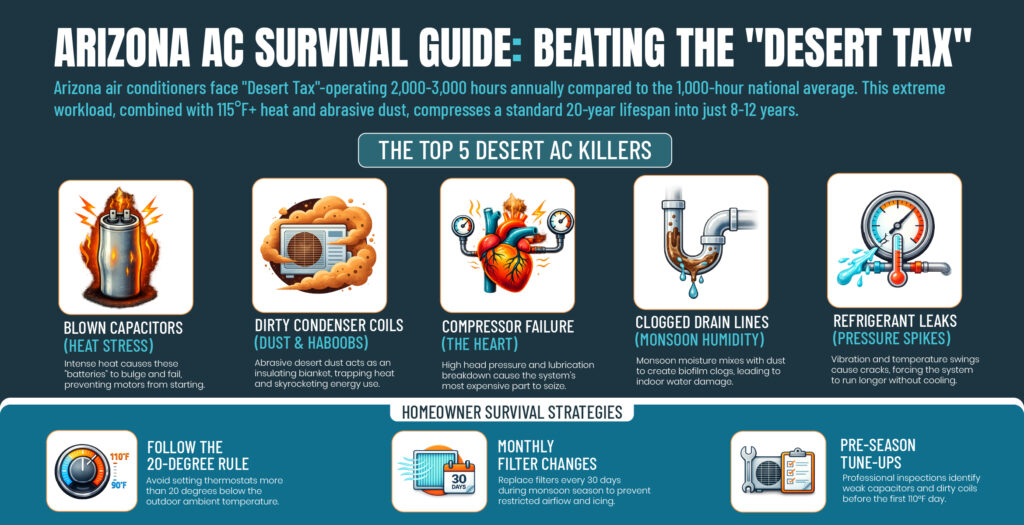
The intense heat also changes the physics of your system. Most units are designed to run optimally up to 95°F. Once the mercury climbs past 110°F, the system struggles to dump heat into the already scorching outdoor air. This constant struggle is what technicians call the “Desert Tax”. It shortens the typical lifespan of a system from the national average of 15-20 years down to 8-12 years in Arizona.
1. Blown Capacitors: The #1 Arizona Repair
Common signs of a bad capacitor include:
- A high-pitched humming sound from the outdoor unit.
- The outdoor fan does not spin.
- The AC takes a long time to start cooling after you lower the thermostat.
- The top of the capacitor looks swollen or “bulged”.
2. Compressor Burnout: The "Cardiac Arrest" of HVAC
3. Dust Storms and the "Blanket" Effect
4. Refrigerant Leaks and Pressure Spikes
5. Monsoon Humidity and Clogged Drain Lines
Quick Reference: Symptoms and Repair Costs
AC Problem | Warning Signs | Average Repair Cost |
Bad Capacitor | Humming noise, fan won’t spin, delayed start | $150 – $350 |
Dirty Coils | Rising energy bills, system runs 24/7 | $150 – $400 |
Clogged Drain | Water leaking from ceiling, system won’t turn on | $125 – $450 |
Refrigerant Leak | Hissing sound, ice on lines, lukewarm air | $450 – $1,800+ |
Compressor Failure | Tripped breaker, total loss of cooling | $2,000 – $4,000+ |
How to Protect Your AC This Summer
You can take simple steps to extend the life of your unit and lower your bills. These small habits make a huge difference in a desert environment.
- The 20-Degree Rule: Understand that most ACs are designed to cool your home to about 20 degrees lower than the outdoor air. If it is 115°F outside, set your thermostat to 78°F or 80°F. Forcing it to 70°F creates dangerous internal pressures.
- Monthly Filter Changes: Check your filters every 30 days. A dirty filter is the number one cause of system failure.
- Rinse Your Outdoor Unit: After a dust storm, turn the power off and gently rinse the outdoor coils with a garden hose. Do not use a pressure washer, as it will bend the delicate metal fins.
- Clear the Area: Keep at least two feet of clear space around your outdoor unit. Trim back bushes and remove debris so the unit can “breathe”.
- Pre-Season Tune-Ups: Schedule a professional AC inspection in the spring. A technician can identify small problems, such as a weak capacitor or a refrigerant leak, before they lead to a breakdown during the summer.