What Are Common AC Problems in Arizona Heat?
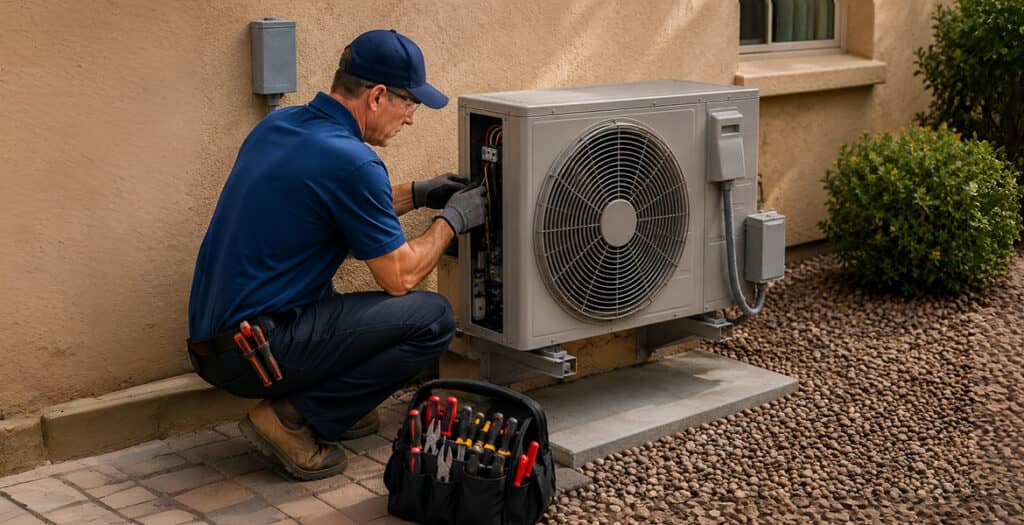
If you live in Arizona, you know that a reliable air conditioner is essential for handling the summer heat. When the outside temperature hits 115°F, your home should be a safe oasis. However, the desert climate is brutal on mechanical systems. This guide explains the most common AC problems and what to do if your air conditioner is not cooling in Arizona.

The "Desert Tax" on Your AC

Arizona air conditioners face a workload that most systems in the country never experience. In milder states, a unit might run for 800 hours a year. In the Phoenix Valley, your AC logs between 2,000 and 3,000 hours annually. This means a 10-year-old unit in Arizona has been used about as much as a 25-year-old unit in the Midwest.

The intense heat also changes the physics of your system. Most units are designed to run optimally up to 95°F. Once the mercury climbs past 110°F, the system struggles to dump heat into the already scorching outdoor air. This constant struggle is what technicians call the “Desert Tax”. It shortens the typical lifespan of a system from the national average of 15-20 years down to 8-12 years in Arizona.
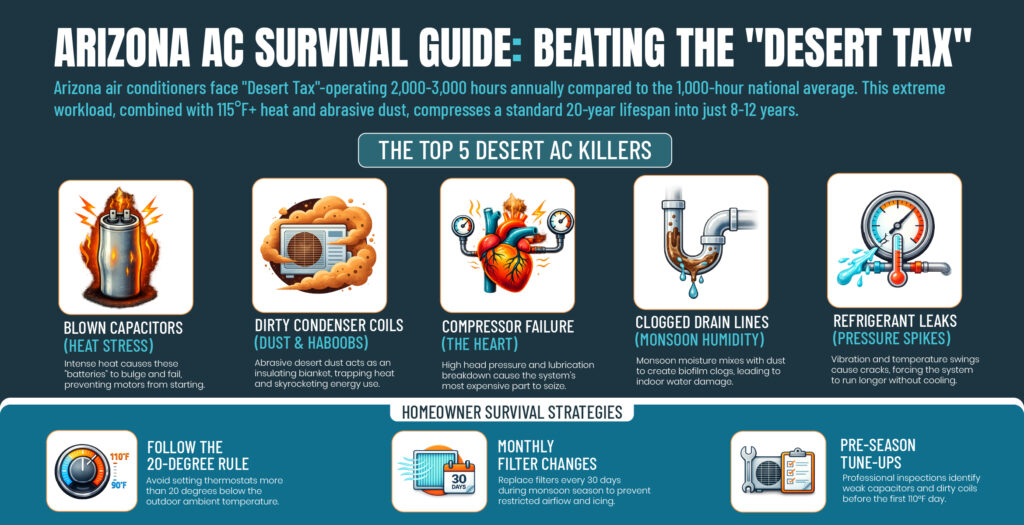
1. Blown Capacitors: The #1 Arizona Repair
Most of the time, capacitor issues are the reason people call for AC repair in the Phoenix metro area. This small, cylindrical device works like a temporary battery. It provides the huge jolt of electricity needed to start the compressor and fan motors.
High heat is one of the main causes of capacitor failure. These parts have a maximum temperature rating, usually around 158°F. On a 115°F day, the air inside your unshaded metal AC cabinet can easily exceed that limit. The heat can cause the fluid inside the capacitor to expand and eventually leak.

Common signs of a bad capacitor include:

  • A high-pitched humming sound from the outdoor unit.
  • The outdoor fan does not spin.
  • The AC takes a long time to start cooling after you lower the thermostat.
  • The top of the capacitor looks swollen or “bulged”.
2. Compressor Burnout: The “Cardiac Arrest” of HVAC
The compressor is one of the most important parts of your AC system. It is also the most expensive part to replace. In Arizona’s extreme heat, the compressor faces “cardiac stress”. It must pump against much higher pressures to move heat outside.
Continuous operation in triple digits can cause the internal lubricating oil to break down. When this oil thins out, metal parts grind together. This leads to mechanical seizure or an electrical short in the motor windings. If your compressor fails, the cost is often so high ($2,000 to $4,000+) that it makes more sense to replace the entire outdoor unit.
3. Dust Storms and the “Blanket” Effect
Arizona is famous for haboobs, massive dust storms that carry millions of tiny particles. This fine dust is like sandpaper for your AC. It coats your outdoor condenser coils, which makes it harder for them to release heat.
When dust covers these coils, they can’t release heat properly. Since the heat stays trapped, your AC has to run longer to cool the space. Dust also clogs air filters rapidly. In many parts of the country, you can change a filter every three months. In Arizona, you must check and change your filter every 30 days during the summer.
4. Refrigerant Leaks and Pressure Spikes
Refrigerant is the fluid that absorbs heat indoors and releases it outside. High outdoor temperatures increase the pressure inside your refrigerant lines. This intense pressure cycling puts stress on copper lines and joint welds.
Over time, vibration and thermal expansion cause tiny cracks. If your refrigerant is low, your system will struggle to cool, and the indoor coil might even freeze into a block of ice. You should never just “top off” your refrigerant. A technician must find and seal the leak; otherwise the problem will return.
5. Monsoon Humidity and Clogged Drain Lines
Monsoon season brings a sudden spike in humidity from July through September. While the rain is a relief, it introduces a “latent load” on your AC. Your system now has to spend energy wringing water out of the air before it can lower the temperature.
This process creates a large amount of condensate water. In Arizona’s warm attics, this water can mix with dust to grow algae and “slime” inside your PVC drain lines. If the line clogs, water can back up and leak through your ceiling. Most modern systems have a “float switch” that will shut your AC off if it detects a backup, preventing water damage.
Quick Reference: Symptoms and Repair Costs
The following table summarizes common Arizona AC issues and what you might expect to pay for a professional repair in the Phoenix or Mesa areas.

AC Problem

Warning Signs

Average Repair Cost

Bad Capacitor

Humming noise, fan won’t spin, delayed start

$150 – $350

Dirty Coils

Rising energy bills, system runs 24/7

$150 – $400

Clogged Drain

Water leaking from ceiling, system won’t turn on

$125 – $450

Refrigerant Leak

Hissing sound, ice on lines, lukewarm air

$450 – $1,800+

Compressor Failure

Tripped breaker, total loss of cooling

$2,000 – $4,000+

How to Protect Your AC This Summer

You can take simple steps to extend the life of your unit and lower your bills. These small habits make a huge difference in a desert environment.

  • The 20-Degree Rule: Understand that most ACs are designed to cool your home to about 20 degrees lower than the outdoor air. If it is 115°F outside, set your thermostat to 78°F or 80°F. Forcing it to 70°F creates dangerous internal pressures.
  • Monthly Filter Changes: Check your filters every 30 days. A dirty filter is the number one cause of system failure.
  • Rinse Your Outdoor Unit: After a dust storm, turn the power off and gently rinse the outdoor coils with a garden hose. Do not use a pressure washer, as it will bend the delicate metal fins.
  • Clear the Area: Keep at least two feet of clear space around your outdoor unit. Trim back bushes and remove debris so the unit can “breathe”.
  • Pre-Season Tune-Ups: Schedule a professional AC inspection in the spring. A technician can identify small problems, such as a weak capacitor or a refrigerant leak, before they lead to a breakdown during the summer.
Repair or Replace? The 10-Year Mark
Eventually, every unit reaches its limit. If your system is older than 10 years and needs a major repair, you should consider a replacement. A good rule of thumb is the 50% Rule: if the repair cost is more than half the value of a new system, replacement is usually the better investment.
Newer systems with high SEER2 ratings are much more efficient. They can reduce your monthly cooling bills by 20% to 40%. In Arizona, where cooling is the biggest part of your utility bill, these savings pay for the new unit much faster than in other states.
Keep in Mind
Arizona’s extreme heat can put a lot of stress on your AC system. Pay attention to unusual noises, higher energy bills, or reduced cooling performance, and don’t skip your monthly air filter replacement. Many Arizona heat AC issues can be prevented with regular maintenance and early repairs. If you notice anything unusual, schedule a professional inspection early. Repairing a small problem now is usually much easier and less expensive than dealing with a major AC repair later.